The CrossCountry trainee train driver assessment process includes an application review, online assessments facilitated by SHL, train-driver psychometric testing, a values alignment meeting and a safety-critical medical. Each part needs a different approach to preparation.
This guide explains those stages and how to choose relevant practice materials.
October 2026 recruitment: The Manchester apprentice train driver advert gives a closing date of **14 October 2026**. Check your chosen vacancy for its current availability, eligibility requirements and deadline.
TTDI provides independent guidance and practice materials. We are not affiliated with CrossCountry, Arriva, SHL or any official assessment provider.
CrossCountry recruitment stages at a glance
The advertised stages are summarised below. Follow your invitation for the precise arrangements.
| Stage | What to prepare |
|---|---|
| Application review | Accurate information and specific evidence against the role requirements |
| SHL online assessments | The instructions, examples and technical requirements supplied with your invitation |
| Train-driver psychometric testing | The relevant cognitive skills and formats identified in your assessment guidance |
| Values alignment meeting | Honest examples showing how you behave, make decisions and work with others |
| Safety-critical medical | The documents and information requested by the medical provider |
The campaign lists these as separate elements of selection. It does not publish a complete test-by-test specification.
1. Application review: show evidence of suitability
Start with the vacancy requirements. Check that your circumstances fit the depot location, training commitment and other eligibility conditions before completing the application.
CrossCountry’s official application-process guidance explains that applications go through Workday and may require a CV and covering letter.
Our preparation advice is to replace broad claims with specific examples. Instead of writing “I am safety-conscious”, explain a situation where you followed a procedure, identified a risk or checked something before acting.
Useful examples can come from employment, education, volunteering or responsibilities outside work. Explain what you did and what happened as a result.
Save a copy of your application so you can refer to the same accurate information later.
2. SHL online assessments: start with your invitation
The advertised online screening is facilitated by SHL. Its position in the recruitment process should not be confused with the separate train-driver psychometric-testing stage.
Which SHL tests will you take? Your invitation is the source to use. A provider’s name alone does not identify the exact assessment, question format, time limit or permitted equipment.
Before starting:
– Read every instruction and complete the supplied examples.
– Check the required device, browser and internet connection.
– Arrange a quiet setting where you can work without interruptions.
– Confirm whether any equipment or assistance is permitted.
– Contact recruitment before the assessment if you need an adjustment.
The SHL candidate support centre provides assessment guidance, access to practice resources and technical help. Select preparation that matches the assessment named in your invitation.
TTDI’s attention and concentration products are independent cognitive-skills practice. They are not a verified match for CrossCountry’s SHL screening.
3. Train-driver psychometric testing: practise the relevant skills
Train-driver psychometric selection is a distinct part of recruitment. RSSB’s Psychometric Assessment in Train Driver Selection standard sets requirements and guidance for candidates who will drive on the GB mainline railway.
Read your assessment pack before choosing practice resources. Look for the skills described, the task instructions and whether the exercises use paper, a computer or another format.
For attention and concentration practice, we suggest this routine:
1. Learn the instructions first. Make sure you understand what counts as a correct response.
2. Establish an accurate baseline. Notice missed targets and incorrect responses.
3. Introduce timing. Work towards a steady pace without sacrificing accuracy.
4. Review each attempt. Identify whether errors came from rushing, losing your place or misunderstanding a rule.
5. Practise consistently. Use manageable sessions that allow you to review your work properly.
A practice score is a measure within that exercise. It should not be treated as an official pass prediction.
A focused starting point for attention and concentration
If these are the skills you need to practise, TTDI’s Train Driver Stage One Practice Kit – Windows Download combines:
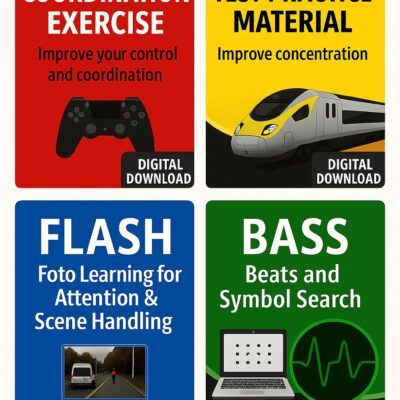
– Beats & Symbol Search (BASS): software practice involving visual symbol search and audio counting, with session scores and feedback on missed responses.
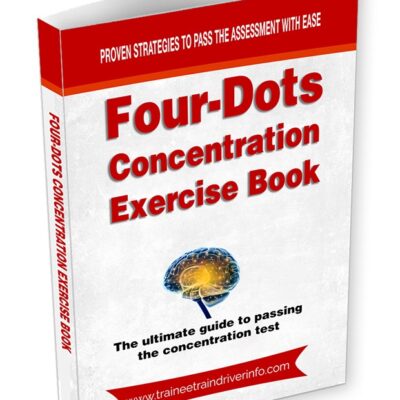
– Four Dots Concentration Exercise Book: a downloadable workbook for printable visual-scanning and concentration practice.
This combination gives you software-based attention practice and paper-based concentration exercises in one package.
View the Stage One Practice Kit for Windows
Using a Mac? View Stage One Train Driver Assessment Preparation for Mac.
Check the product contents and system requirements against your needs before purchasing. These resources train similar cognitive skills; they are not official test papers, replicas or a complete CrossCountry assessment package.
4. Values alignment meeting: prepare genuine examples
CrossCountry’s published values emphasise care for people, safety, respect, diversity and making improvements. Read its company and values information before preparing your examples.
Our suggested preparation is to think about occasions when you:
– Followed a procedure despite pressure to take a shortcut.
– Took responsibility for a mistake and put it right.
– Communicated clearly during a difficult situation.
– Supported a colleague or treated someone’s needs respectfully.
– Used feedback to improve your work.
These are preparation prompts, not confirmed CrossCountry interview questions.
For each example, explain the situation, your responsibility, the action you took and the result. Include what you learned. Practise explaining it naturally rather than memorising a script.
For more help structuring your examples, read our trainee train driver interview preparation guide. Use the actual invitation to confirm the meeting format.
5. Safety-critical medical: follow the provider’s instructions
The campaign includes a safety-critical medical. CrossCountry’s general recruitment guidance also describes pre-employment medical and reference checks.
Follow the appointment instructions and bring any requested identification, documents and health information. Answer questions accurately and direct questions about your individual circumstances to the medical provider.
Practice software cannot establish medical suitability or predict the outcome of this stage.
What happens after successful assessments?
Successful applicants may enter a talent pool until a vacancy becomes available at their chosen location. The campaign explains that the process can take several months, so completing selection does not necessarily mean an immediate training start.
Keep your contact information current and follow the recruitment team’s instructions.
Frequently asked questions
Are CrossCountry’s online assessments and train-driver psychometrics the same stage?
They are listed separately in the campaign. Use the guidance for each invitation and check which stage you are preparing for.
Does “Stage One” mean CrossCountry’s first online assessment?
Do not assume that it does. TTDI’s Stage One product name describes a preparation package. Match its contents to the skills you need to practise rather than to the order of recruitment emails.
Should I buy a complete bundle before receiving my invitation?
Read the official guidance first. If you need attention and concentration practice, a focused package may be enough to start. Choose additional exercises when you understand the skills and formats relevant to your assessment.
Is 40 too old to become a train driver?
No, We have seen some starting their train driver career at 50.
Can I request reasonable adjustments?
Contact the recruitment team early to discuss your needs. CrossCountry’s official guidance invites candidates to ask about reasonable adjustments for interviews. Confirm the arrangements for your particular assessment with the team.
Does buying TTDI practice material guarantee a pass?
No. TTDI provides independently developed exercises for practice. Selection decisions remain with the recruiting organisation and its assessment providers.
Choose practice for your next assessment
Start with the instructions you have received. Identify the skills you need to work on, choose suitable exercises and review your accuracy as you practise.
If attention, listening and visual concentration are your priorities, explore the Stage One Practice Kit for Windows or the Mac preparation package.
For vacancies and application updates, use CrossCountry’s
official careers website.