Your train driver assessment is next week. You’ve also got work, a food shop to do and a gym session you’d like to keep. Where does practice fit for the stage 1 train driver assessment? Start with the commitments already in your diary. Consider the times of day when you feel most focused and energetic, as this will help you retain information better. Look for a few quiet gaps when you can give an exercise your full attention and leave your busiest evening free. Perhaps setting reminders or blocking out time in your calendar can also help ensure that you commit to this preparation time.
Prepare thoroughly for the stage 1 train driver psychometric tests by reading your operator’s invitation first. It tells you what you’ve been asked to prepare for and may include valuable examples. Use those to decide where to spend your time effectively. If you find yourself comfortable scanning a page but struggle to follow a written rule, that gives you a clear focus for your next quiet evening. Practice those written rules using flashcards or summarising them in your own words to reinforce your understanding.
Reading your operator’s invitation first is crucial. It details what you’ve been asked to prepare for and may offer examples that can greatly benefit your study process. Be strategic in how you use those insights to decide where to allocate your precious preparation time. For instance, if you can easily scan documents but find it challenging to follow complex written rules, focus on those areas during your quiet evenings. Try breaking down the rules into manageable chunks, maybe discussing them with a friend or fellow candidate to solidify your understanding.
A sample timetable for the week before the stage 1 train driver assessment
Day 1 is a week before your assessment. Move the shopping, gym, and practice days around to suit your shifts and family plans. Flexibility is key, as is ensuring that you prioritize your practice sessions. Think about dedicating time early in the morning or during lunch breaks if after-work hours are too hectic. Each day should have a clear focus, and you should feel accomplished at the end of each practice session.
Identify something you’d like to practice later in the week. On a gym day, use the quiet of your home to try some paper-based concentration practice. Do the food shop and enjoy the evening off. Choose a quiet spell for an attention exercise, especially if it uses audio materials. Try a written-rules example if it’s directly relevant to your invitation. Spend time understanding that concept well instead of rushing through new material. Check the journey, start time, and anything you’ve been asked to bring.
| Day | How the day could look |
|---|---|
| 1 | Over a cup of tea, read your invitation and open the familiarisation pack. Pick something you’d like to try later in the week. Head out for your usual walk. |
| 2 | On a gym day, try a little paper-based concentration practice while the house is quiet. Put the pencil down when it’s time to leave. |
| 3 | Do the food shop and have the evening off. A busy day can stay busy enough as it is. |
| 4 | Choose a quiet spell for an attention exercise, especially if it uses audio. Afterwards, get outside for a walk or catch up with a friend. |
| 5 | Try a written-rules example if it’s relevant to your invitation. Leave time for something else you’re learning, whether that’s a chapter of a book or a language lesson. |
| 6 | Revisit one thing you found tricky earlier in the week. Keep the rest of the day for your usual plans, whether that’s family time, the gym or errands. |
| 7 | Check the journey, start time and anything you’ve been asked to bring. Pack what you need, have dinner and keep the evening free. |
The invitation letter from the train operator
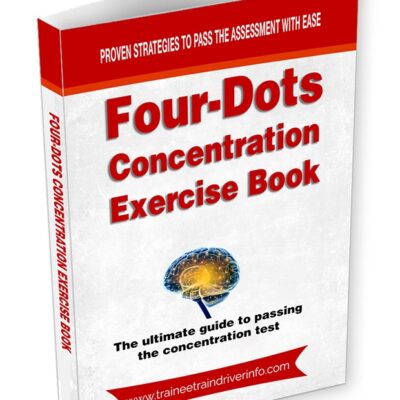
If your invitation mentions Group Bourdon, start with our Group Bourdon concentration practice tips. It’s the number 1 train driver psychometric assessment that is always include in the first stage. Utilize the Four Dots sheets for pencil-and-paper practice. If you lack a printer, consider purchasing the printed Four Dots Concentration Exercise Book and work directly in it. Additionally, take the time to familiarize yourself with the types of questions that may be present in the assessment. You may also be invited to take fault finding test.
Which practice materials for stage 1 train driver psychological test
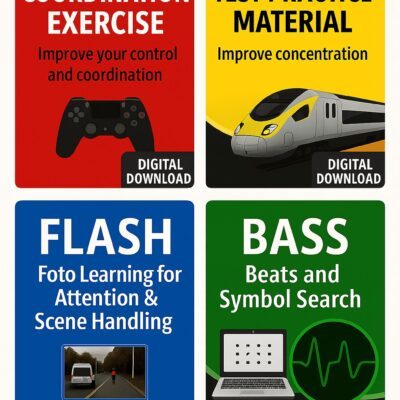
For candidates preparing for both concentration and divided attention, the Stage One Practice Kit for Windows includes the printable Four Dots book and BASS audio and symbol exercises. If your invitation lists comprehension or Dials, Aptitude for Rules and Guidelines covers those skills online. For dedicated fault-finding preparation, ensure you thoroughly review the operator’s familiarisation material. We also offer a Mac book stage 1 train driver preparation kit to cater to different user preferences. Understanding the material’s structure and requirements can provide an edge in your preparation.
If finding a quiet moment is your biggest challenge, our article on ways to improve concentration for train driver tests offers additional strategies and insights. And if a shift runs late and you miss a session, simply pick up at the next quiet opportunity without feeling pressured. There’s no need to squeeze two sessions into the evening before your assessment. Consistency is more effective than cramming, so give yourself grace to manage your time wisely.